Now recruiting PhD students: International Graduate Program (A), Fall 2027
Hayashi Lab welcomes international students through IGP(A), Science Tokyo’s English-taught graduate program. Earn a master’s and a PhD in 3–5 years (Integrated Doctoral Program, Department of Materials Science and Engineering / eMAT program) — no Japanese required, online application from your home country, and a pathway to the Japanese Government (MEXT) Scholarship by university recommendation.
| Fall 2027 intake | Date |
|---|---|
| Application period | 9 Sep – 22 Nov 2026 |
| Supervisor consent deadline | 15 Nov 2026 |
| Online application deadline | 22 Nov 2026, 23:59 JST |
| Results | 3 Mar 2027 |
Contact us first: applications require the consent of your supervisor. Email Dr. Tomohiro Hayashi at th [at] mct.isct.ac.jp (replace [at] with @) with your CV, transcript(s) and a short statement of research interests — ideally by the end of October 2026. We are happy to talk with you on Zoom.
企業の方へ:材料表面・界面の解析技術を活かした共同研究、技術相談、学術指導、社会人博士課程の受け入れを行っています。
Lab introduction video (Japanese), produced when our university was Tokyo Institute of Technology. In October 2024, Tokyo Tech merged with Tokyo Medical and Dental University to form Institute of Science Tokyo.


Exploring biointerfaces with our original analytical techniques
Our research targets are:
- Development of new experimental approaches to investigate surfaces and interfaces
- Understanding of molecular processes at biointerfaces — the interfaces between artificial surfaces and cells or biomolecules
Starting from the elucidation of fundamental interfacial phenomena, we propose their applications in industrial fields. Our tools include AFM-based single-molecule force spectroscopy, gap-controlled infrared spectroscopy, QCM-D, SPR, and machine learning / materials informatics.
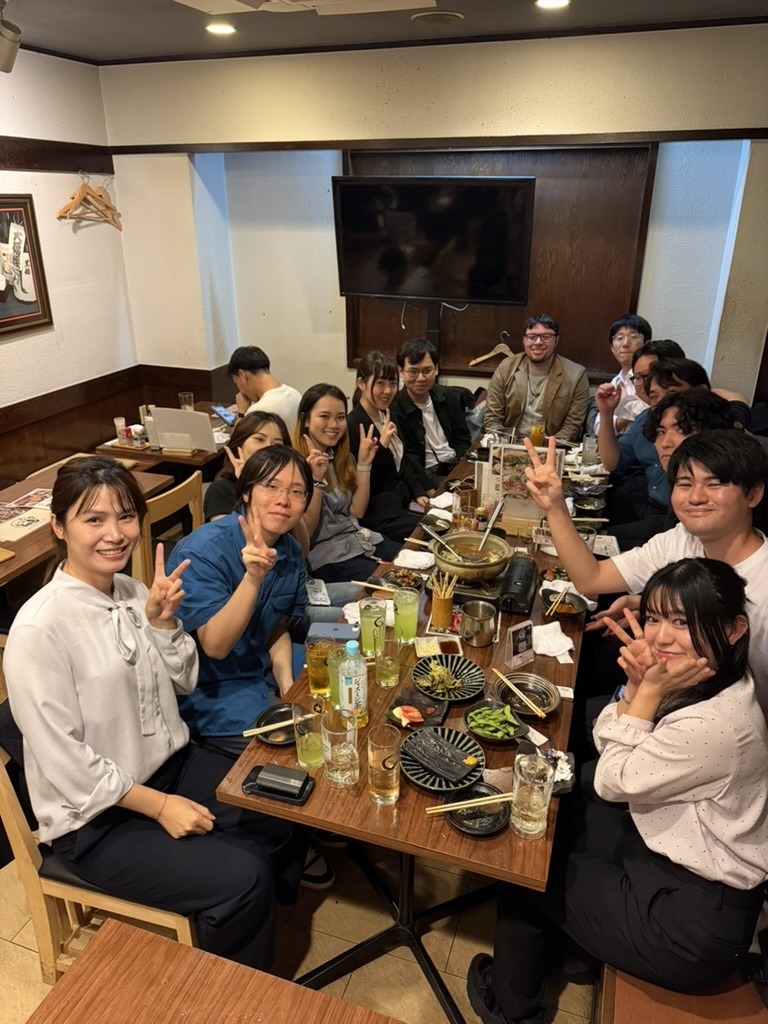
We are a team of people from various fields, nationalities and scientific backgrounds. All current members, including faculty, graduated from universities other than Science Tokyo — students from outside are always welcome.
If you are interested in joining us as a master’s or PhD student, please contact Tomohiro Hayashi (th [at] mct.isct.ac.jp; replace [at] with @).
Affiliation
Department of Materials Science and Engineering, School of Materials and Chemical Technology
Course of Human Centered Science and Biomedical Engineering
Institute of Science Tokyo
For Japanese applicants: 日本語での研究室案内・大学院入学のご案内
Recent News
【講師】KISTEC教育講座「中間水を活かした材料・表面・デバイス設計」(2026年12月1日〜3日)
林が、神奈川県立産業技術総合研究所(KISTEC)の教育講座「〜物質の付着はコントロールできる〜 中間水を活かした材料・表面・デバイス設計」で講師を務めます。本講座は九州大学の田中賢教授がカリキュラムを編成し、大阪電気通信大学の森田成昭教授、林の3名で講義を担当します。企業・研究機関で材料・表面・デバイスの研究開発に携わる方を対象とした講座で、3日目には当研究室(東京科学大学 横浜キャンパス)で見学会を行います。
講座の概要
- 日程:2026年12月1日(火)・2日(水)・3日(木)
※1日目・2日目は1日単位の選択受講も可能です(3日目の見学会のみの参加はできません) - 会場:1・2日目(講義)かながわサイエンスパーク内講義室(川崎市高津区)/3日目(見学会)東京科学大学 横浜キャンパス 林研究室
- 定員:25名(先着順)
- 主催:地方独立行政法人 神奈川県立産業技術総合研究所(KISTEC)
- 受講料・お申し込み:KISTECの講座ページをご確認ください
講座のねらい
材料や製品の多くは、水やタンパク質などの生体成分と接する環境で使われます。本講座では、材料表面の水に着目した「中間水コンセプト」を軸に、材料と生体成分の相互作用を分子・細胞レベルで理解し、次世代の製品化に必要な材料・表面・デバイス設計の指針を実務に活かせるようになることを目指します。医療機器・医薬品に限らず、食品、化粧品、日用品、水処理・防汚、バイオデバイス、細胞培養・再生医療、計測技術など、水環境下で使われる材料・デバイスに関わる幅広い分野の方にお勧めします。
林の担当内容
12月2日(水)講義「中間水測定の実際―表面・界面科学および情報科学の手法を用いたバイオ界面の先端計測・解析」①②(12:40〜15:35)
タンパク質吸着・細胞接着の場となるバイオ界面の分子プロセスを、表面・界面科学と情報科学(機械学習)の手法でどのように解析するかを解説します。異なる測定手法で得られた結果が、材料に対するタンパク質や細胞の応答とどのようにつながるのかを、基礎から応用まで議論します。主な内容は以下のとおりです。
- バイオ界面を構築するための表面コーティングと、さまざまな界面分析手法
- タンパク質吸着・細胞接着を決める界面相互作用、付着性表面と抗付着性表面の違い
- 界面における水分子のふるまいと抗付着性の関係
- 分子が夾雑した環境でのバイオ界面、界面における微生物のふるまいの解析
- 細胞接着を促進する表面改質と、原子間力顕微鏡による細胞接着サイトの可視化
- 情報科学を用いた単分子膜へのタンパク質吸着量の予測、高分子薄膜の設計、生体分子表面の構造ルールの抽出
12月3日(木)見学会(10:00〜12:00、東京科学大学 横浜キャンパス 林研究室)
界面の水や吸着タンパク質の状態を観察するために当研究室で改良・開発してきた赤外分光装置や、表面間力測定装置(原子間力顕微鏡)をご覧いただきます。また、AIを使ってその場でプログラミングを行い、データを解析するデモを行います。プログラミングの経験がない方でも、マテリアルインフォマティクスの手法を生体材料分野に応用する第一歩を体験していただけます。見学会の終了後には個別相談会も予定されています。
お申し込み・お問い合わせ
受講料、申込方法、カリキュラムの詳細は、主催者であるKISTECの講座ページをご覧ください。講座に関するお問い合わせはKISTECの事務局までお願いいたします。
当研究室との共同研究・技術相談については、「企業の方へ」のページもあわせてご覧ください。
Congrats to the graduates!


[paper accepted] Hydration water in PEG- and PMPC-containing hydrogels
Hydration water governs the properties of hydrogels, but it is difficult to measure selectively in the presence of abundant bulk water. In this work, we applied our pressure-controlled ATR-IR spectroscopy combined with multivariate curve resolution (MCR) to hydrogels based on poly(2-hydroxyethyl methacrylate) containing PEG or PMPC, and selectively resolved the spectra of their hydration water.
Shoichi Maeda, Shunta Chikami, Glenn Villena Latag, Ryuya Gotanda, Masaki Kamiya, Koji Miyamoto, Chia‐Ying Chiang, Tomohiro Hayashi. “Spectroscopic Analysis of Hydration Structures in PEG‐ and PMPC‐Containing Hydrogels by Pressure‐Controlled ATR‐IR Combined With Multivariate Curve Resolution”. Surface and Interface Analysis (2026).
Links
- Journal: Surface and Interface Analysis (2026) DOI: 10.1002/sia.70121

[paper accepted] Hydration repulsion and selective protein adsorption on saccharide SAMs
Why do saccharide surfaces resist nonspecific protein adsorption? We studied glucose-, lactose- and maltose-terminated self-assembled monolayers (SAMs) and found saccharide-dependent protein resistance (maltose > lactose > glucose). Surface force measurements revealed short-range repulsion caused by structured interfacial water, which was closely linked to the observed selectivity in protein adsorption.
Zhentao Zhao, Tomohiro Hayashi. “Written in Water: Hydration Repulsion Governs Selective Protein Adsorption on Saccharide Self-Assembled Monolayers”. Langmuir (2026).

Links
- Journal: Langmuir (2026) DOI: 10.1021/acs.langmuir.6c02346
[paper accepted] Surface arginine and protein corona formation on anti-fouling surfaces
The protein corona determines the biocompatibility of medical devices. Using quantitative proteomics (nano LC-MS/MS), we identified more than 200 serum proteins adsorbed on each of six model organic surfaces. Conventional descriptors such as isoelectric point and molecular weight did not explain which proteins were enriched on non-fouling films, whereas the fraction of surface arginine was correlated with enrichment.
Ayano Nomura, Guanghao Hu, Ang Art Wei Yao, Chisato Komura, Hideharu Kurioka, Tomohiro Hayashi. “Chaotropic Surface Arginine Correlates With Protein Corona Formation on Anti‐Fouling Biomaterial Surfaces: A Quantitative Proteomics and Protein Structure Study”. Advanced Materials Interfaces (2026).

Links
- Journal: Advanced Materials Interfaces (2026) DOI: 10.1002/admi.70652
[paper accepted] Interfacial water barriers on zwitterionic and nonionic SAMs
Nonionic oligo(ethylene glycol) and zwitterionic sulfobetaine SAMs resist proteins and cells to a similar extent despite their different chemistry. By combining AFM surface force measurements with surface-enhanced infrared absorption (SEIRA) spectroscopy, we show that the two surfaces form contrasting interfacial water barriers, with different hydrogen-bonding states of the interfacial water.
Zhentao Zhao, Elisa Margarita Mendoza Zamarripa, Shigeaki Morita, Evan Angelo Quimada Mondarte, Ryongsok Chang, Chia-Ying Chiang, Tomohiro Hayashi. “Thin but Strong Versus Thick but Soft: Contrasting Interfacial Water Barriers on Zwitterionic and Nonionic Antibiofouling Self-Assembled Monolayers”. The Journal of Physical Chemistry B (2026).
Links
- Journal: The Journal of Physical Chemistry B (2026) DOI: 10.1021/acs.jpcb.6c02994

[paper accepted] Mechanical properties and hydration of zwitterionic peptide SAMs
Using quartz crystal microbalance with dissipation monitoring (QCM-D), we investigated the assembly, viscoelastic properties and interfacial hydration of zwitterionic peptide SAMs with four sequences (EK, DK, ER and DR). Arginine-containing SAMs showed a higher apparent elastic modulus and viscosity than the lysine-containing ones, highlighting the role of amino acid composition in these antifouling coatings.
Junsong Hu, Glenn Villena Latag, Zhentao Zhao, Shoichi Maeda, Kasumi Tsuji, Tomohiro Hayashi. “Evaluation of the Mechanical Properties of Zwitterionic Peptide Self-Assembled Monolayers and Their Interfacial Hydration via a Quartz Crystal Microbalance with Dissipation Monitoring”. ACS Applied Bio Materials (2026).
Links
- Journal: ACS Applied Bio Materials (2026) DOI: 10.1021/acsabm.6c00359

[paper accepted] Nanoparticle-loaded polyester fibers as triboelectric generators
We measured the mechanical strength and electrostatic charge retention of polyester fibers containing SiO2 and ZrO2 nanoparticles. Increasing the nanoparticle content decreased mechanical strength but prolonged the charge half-life, and the behavior was described with an equivalent-circuit model.
Taichi Nakamura, Tomohiro Hayashi, Makoto Ryo Harada, Helmut Takahiro Uchida. “Possibility of Using Nanoparticle-Loaded Polyester Fibers as a Triboelectric Generator”. Solid State Phenomena (2026).
Links
- Journal: Solid State Phenomena (2026) DOI: 10.4028/p-1yxzrz
[review] Proteins and bacteria near model organic surfaces in crowded conditions
This review traces biointerface science using SAMs of thiols on gold, from structural characterization to design rules for bio-inertness and the “water barrier” concept. We highlight recent studies in realistic crowded environments, in which fouling surfaces form a viscous interphase protein layer, while hydration barriers on zwitterionic surfaces keep bacteria in a reversible, tethered “hovering” state.
Tomohiro Hayashi, Glenn Villena Latag, Evan Angelo Quimada Mondarte. “Three-Dimensional Behaviors of Protein Molecules and Bacteria near Model Organic Surfaces in Real Crowding Conditions”. Applied Nano (2026).
Links
- Journal: Applied Nano (2026) DOI: 10.3390/applnano7010004
Mid-term progress report
Motoharu (president), Airi, and Soichiro finished their mid-term review presentations.


